Category: Uncategorized

  • Catch of the Week 33: Oedipus responds to the Sphinx

    CotW 32 Oedipus answers the Sphinx

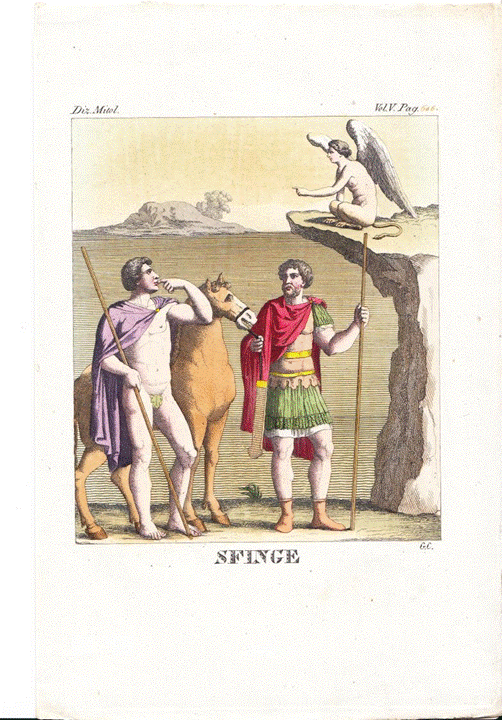
    G. C. (after Pietro Santi Bartoli), ‘Sfinge’, ca. 1825, hand coloured engraving, 14 x 12 cm. (page 23,6 x 15,5 cm.) (Decoration from the Tomb of the Nasoni), from: Dizionario d’ogni mitologia e antichità incominciato da Girolamo Pozzoli sulle tracce del Dizionario della favola di Fr. Noel, continuato ed ampliato dal prof. Felice Romani e dal dr. Antonio Peracchi. Vol.V, Milan: Batelli e (Ranieri) Fanfani 1825, p.606.

    This coloured engraving illustrating the mythological creature of the sphinx (as indicated by its caption), is literally taken over from Bartoli dating from 1680.1 This book ilustrated and explained the archeological thrill of that day, a just disovered Roman tomb that was first believed to be the poet Ovid’s. It turned out to be the family vault of Quintus Nasonius Ambrosius, dating ca. 150 AD, depicting mythological scenes. This ‘Oedipus answering the sphinx’ formed part of an eleborate program on the back wall of the tomb, paired with Pegasus and related to Orpheus and Eurydice.

    for more information of the recent reconstruction in colour, click here

    1. Bartoli, Pietro Santi, (1635-1700), ‘Edipo resonde alla Sfinge’, 1680, engraving, tavola XIX in: Bellori, Giovanni Pietro, Delle Pitture antiche del Sepolcro de’Nasonii , nella Via Flaminia disegnate, ed intagliate alla similitudine degli antichi originali. Rome: Battista Bussotti 1680; https://archive.org/stream/lepittureantiche00bell#page/n7/mode/2up
  • Catch of the Week on mini Tour: Amsterdam

    CotW on tour Amsterdam1

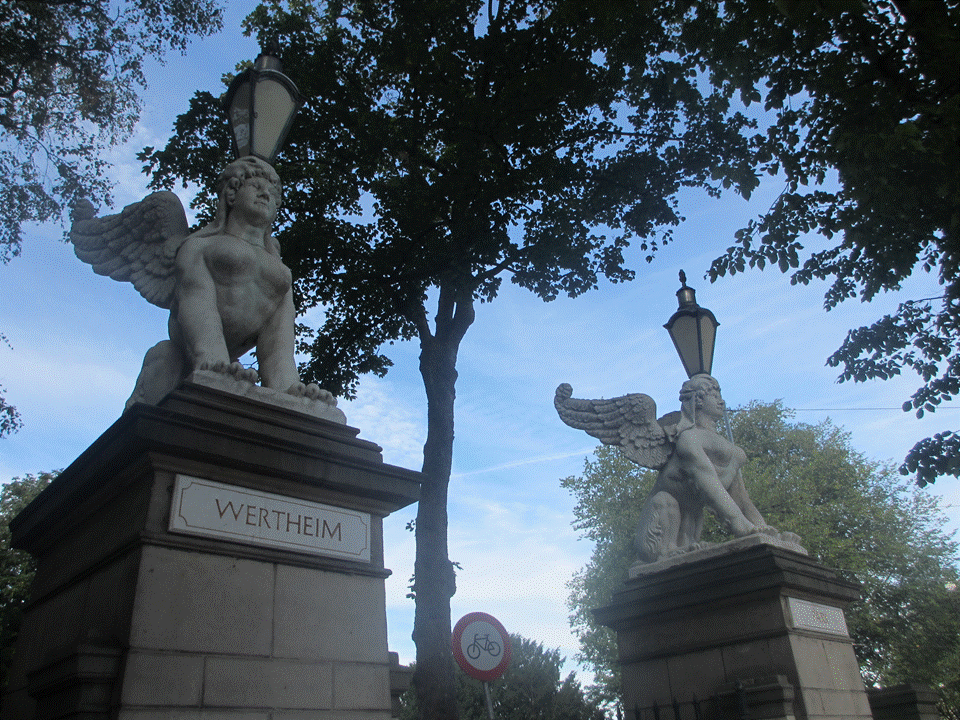
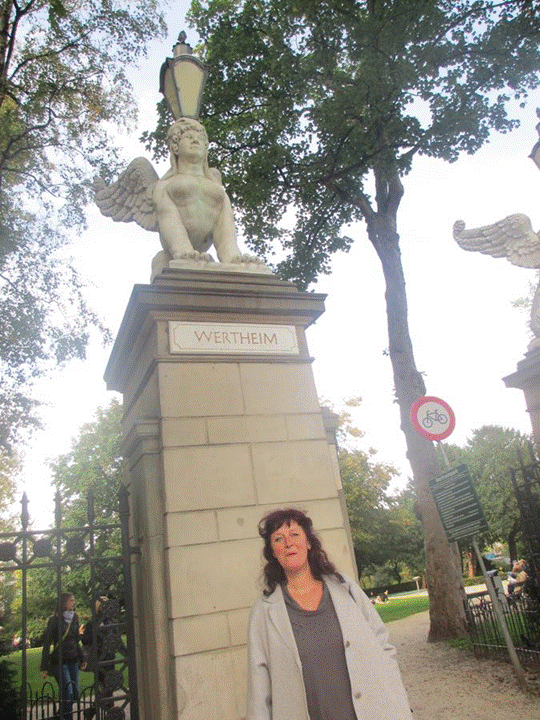
    Mannetje, Hans ‘t (1944), ‘Sphinxes’ 1986, marble, Wertheimer Park, Plantage Middenlaan, Amsterdam

    After the World Tourism Day, the focus on a strange phenomenon: you travel around the globe to see art and exhibitions, while you ‘forget’ the pearls your own home town has to offer. Hereby I shall make it up with Amsterdam sphinxes with a post on a pair. Or maybe it is better to annouce the ladies as thé Amsterdam sphinxes: it is the only pair in public space.
    CotW on tour Amsterdam

    The duo, although classical in its form, is rather young, dating from 1986. Actually they are a remake of a pair, probably made from sinc. After WW2, the dilapidated creatures were removed and lost. But the local residents demanded the guardians back, and they succeeded after years. Modelled after the protoypes of the early 19th century, as shows the historical material on the website:

     
    More information about the sphinxes in front of the Wertheim Park

  • Catch of the Week 31: Do not dream any longer…just go there!

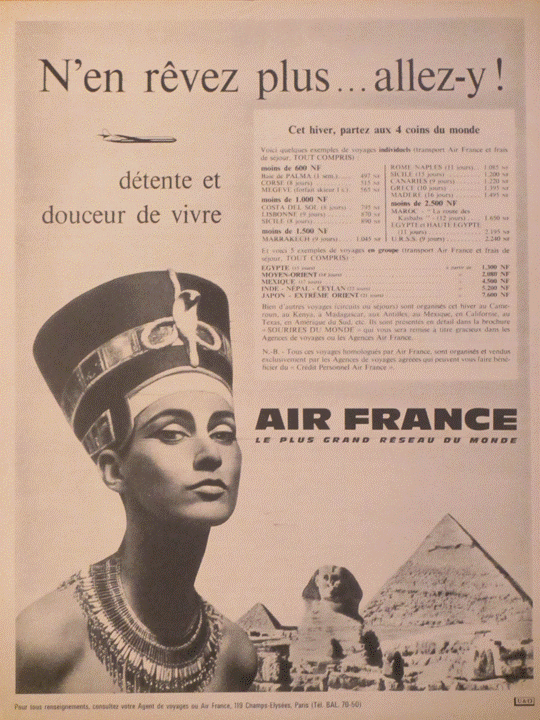
    CotW31 Air France Nefertiti and Sphinx

    U&O (Urbi et Orbi), ‘N’en rever plus… allez-y!’ 1960’s for Air France, black and white photocollage advert, full page, 33,6 x 24 cm.

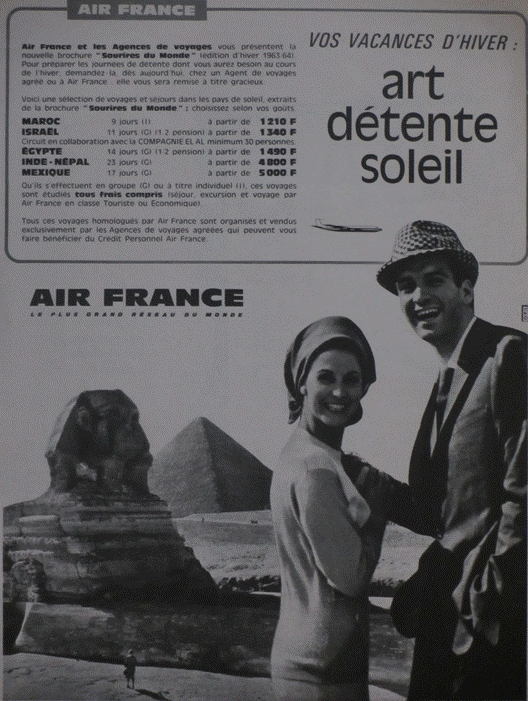
    It is World Tourism Day: attention for a phenomenon that exists for ages, but our way of enjoying holiday developped at the end of the nineteenth century. In the 1960’s Air France seduced us with the monuments of the Great Giza Sphinx, combined with the pyramids. ‘No longer dreaming about one of the Wonders of the World, just go. Especially for the winter times.
    A model is mimicking the Nefertiti bust with the long neck and the blue headdress. Yet this item cannot be found during this tour: it is part of the collection of the Egyptian Museum in Berlin.

    CotW 31 Air France Sphinx and couple

  • Catch of the Week 30: Minx in Spoonlight

    CotW Minx in Spoonlight

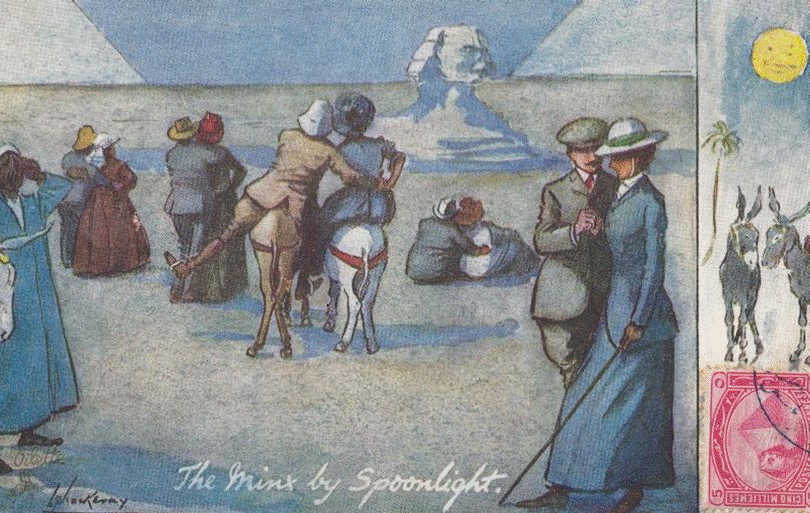
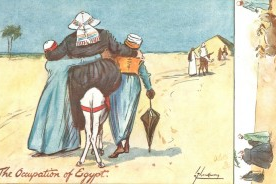
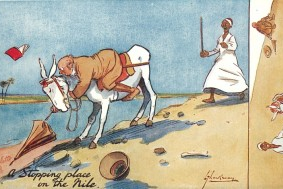
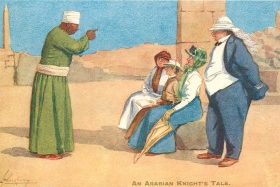
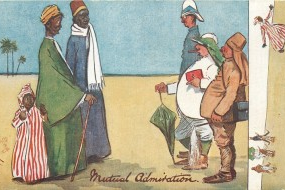
    Thackeray, Lance (Lot) (1869 – 1916), ‘The Minx by Spoonlight’, 1908, Raphael Tuck and Sons Oilette, from the series: ‘Humour in Egypt-Cairo’, postcard 9547, Engeland

    This postcard is an ‘oilette’ by Raphael Tuck & Sons of London. They invited artists and, in this case, illustrators, to make artistic souvenirs as an alternative for picture postcards. Under them the British Lance Thackery, humor was his speciality.

    Starting with the title, ‘The Minx by Spoonlight’, a linguistic joke that actually is called ‘spoonerism’. The term should refer to the sounds occuring in ordered sequence (like ‘Sporks and Foons’ and the here practised ‘Minx in Spoonlight’), a phenomenon called after William Archibald Spooner (1844-1930) committing these errors quite often.*1

    As an illustrator, Thackery started his comic sporting illustrations, but when having hibernated in Egypt in 1907-07, this country became his subject as well. It resulted in the album ‘The light side of Egypt’ (1908) containing 36 commented plates.*2 Soon postcards followed.

    Instead of catching the grandeur of the pharaonic monuments or the exotic landscape with its natives, Thackeray depicted the ‘adventures’ of his fellow travellers, especially their misbehavior as travellers. The overdressed and over-sized well-to-dos contrast with the locals, here desperately depicted on the left side; he must be held responsible for a daring experience the tourists collectively undergo in pairs. A romantic view on the Sphinx and the pyramids, sprinkled by moonlight. Indeed, they actually are spooning, archaic for foolishly falling in love. On the right side even two donkeys cannot remain unsensitive for the moment…..

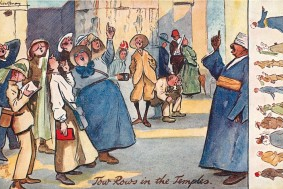
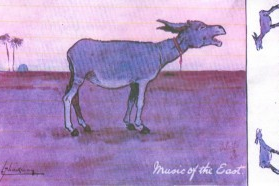
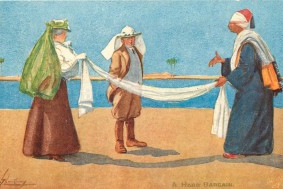
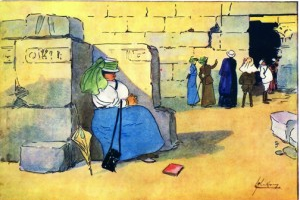
    Here are some postcards (Hackerty designed hundreds), found on Andrew Humphreys website. You easily recognize the drawing style (especially the added band on the right side with an additional joke). Here the depictions are all toppled over, where is the donkey pair of ‘The Minx by Spoonlight’ straight up.

    *1 Penhallurick, Rob, Studying the English Language. Hampshire: Palgrave Macmillan 2010 (2nd edition), p.240.

    *2 Humphreys, Andrew, ‘The Light Side of Egypt’ on: Egypt in the Golden Age of Travel 2012 http://grandhotelsegypt.com/?p=646

  • Catch of the Week 29: Rest again

    CotW Rest

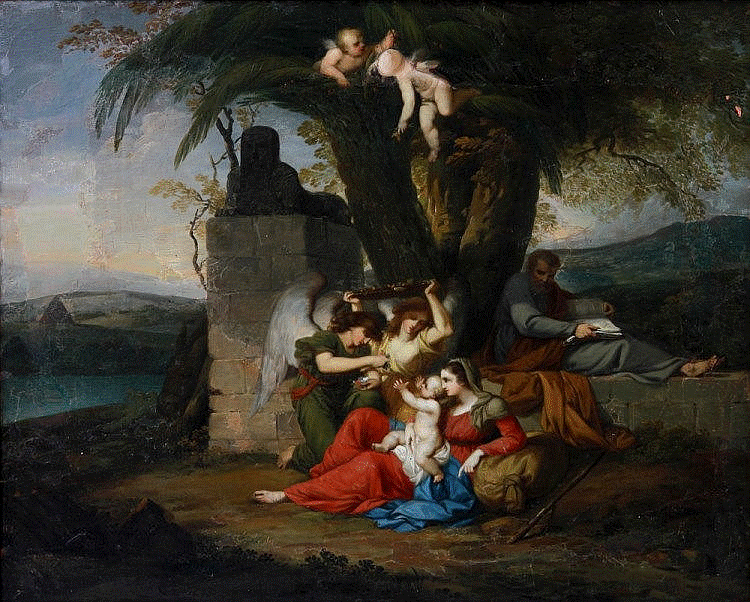
    Anonymous‚ ‘Rest on the flight to Egypt‘, ca. 1800, oil on canvas, 37 x 45 cm.

    A fresh catch, on auction today: the rest on the Flight to Egypt. Joseph reads a book in the shade of the tree, while Mary hold Christ on her lap. He is focused on two winged females, serving food and drinks. This refers to the miracles during their tour: not only should the holy family have traveled the distance of thirty travelling days within twenty-four hours, when famine stikes, Jesus makes a palm tree bending down, offering its fruits to Mary. Here the two putti pick the fruit from the trees. Afterwards the tree stretches out on his command, so fresh water concealed below it roots to flow freely.
    The classical scene is set in an Italian landscape, yet the sphinx was used as a place marker: the family arrived in Egypt on their flight to save the sibling from King Herod’s threat to kill all young boys.

  • Catch of the Week 28: Devotional refugees

    CotW Devotopnal refugees

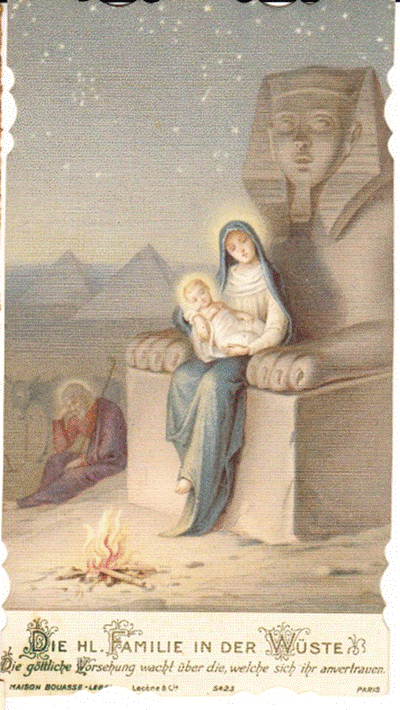
    Maison Bouasse-Lebel (Paris), ‘Die heilige Familie in der Wüste.’ (‘The holy Family in the Desert’ )  ca. 1910-15, andachtsbild (devotional picture), 11 x 6,2 cm.

    Herds of desperate people fleeing from their country in numbers so abstract we need a protagonist to emerse ourselves into the dramatic impact. Halas a little boy had the dubious honour to become the face of the dangerous fate Syrians face when escaping their lethal home country.
    Escaping is not a characterestic of our era: well over 200 years ago a family with a little boy fled to another country. The holy family went to Egypt, there are various stories on the events. Asylum was not nessecary, and they succeeded to return. Sure, as the text on the devotional picture explains: they had the protection of divine providence. Let’s hope this protection still exists generously. The original goal of this image to reflect, be it in a different context, can still be served!


  • Catch of the Week 27: Hideous lure

    CotW Carolein Smit

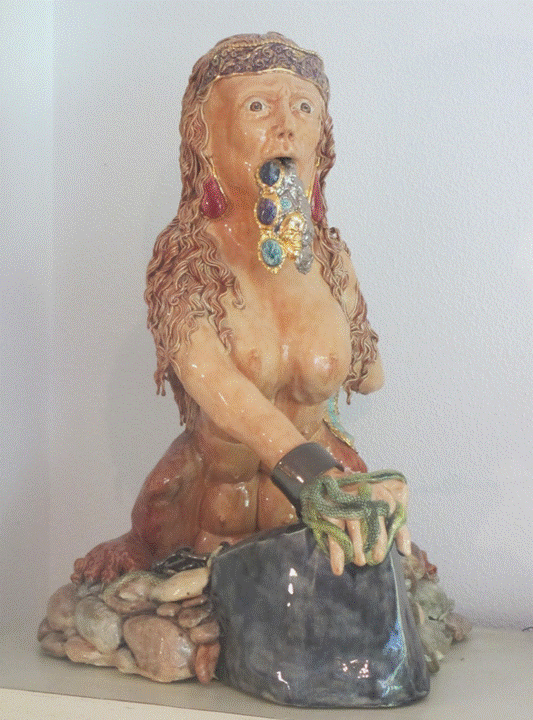
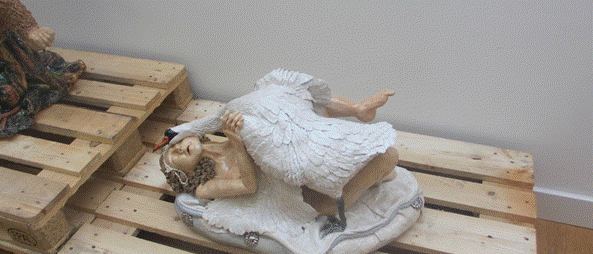
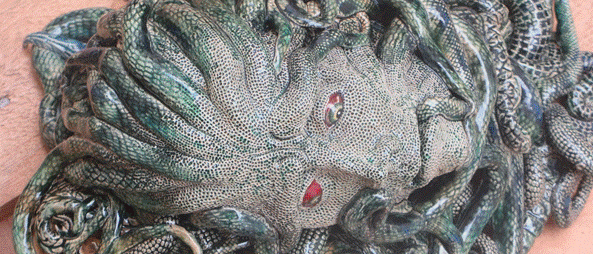
    Smit, Carolein (1960), ‘Sphinx’, 2011, glazed ceramics,

    45 x 63 x 61 cm.

    The mixture of the alluring figures, with shiny golden lustre diadem, with an unexpected dangerous twist, snakes between the fingers of the chained hand, typifies Carolein Smit’s work. That is why we have asked here to make a sphinx for us.

    Yesterday, an exhibition with new works of Carolein Smit openend at the  Flatland Gallery in Amsterdam.

    Website Carolein Smit

    Website Flatland Gallery

    Website Victoria and Albert, London

  • Catch of the Week 26: Quote…? Imitation..?

    CotW imitation or quote
     

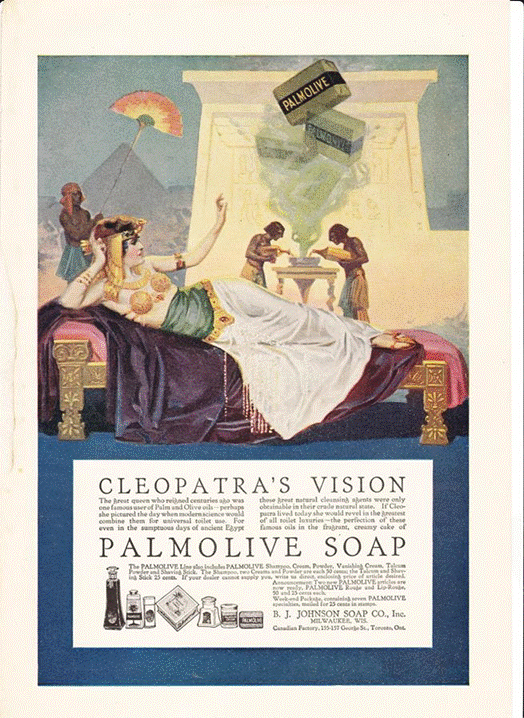
    Lasker, Albert (1880–1952) and Claude Hopkins ( (1866-1932), ‘Cleopatra’s vision’ 1917, advertisement for Palmolive soap from The American Magazine, Vol. 83, p.89

    When looking at e-bay, I recognized a familiair reclining beauty in pharaonic context, yet in a new setting and a different context:

    In the advertisement for soap (related to palm oil and olive oil),  Cleopatra reclines on an oriental couch, against a temple facade and further away a pyramid.

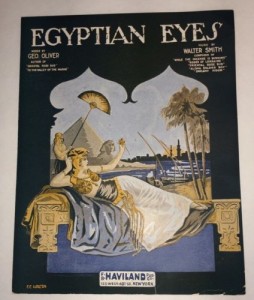
    The sheet museic dates only two years later, here the frame suggests islamic architecture, the temple changed for the Nile and the pyramid is accompanied by the Great Giza sphinx.


    Walton, E.E., cover sheetmusic ‘Egyptian Eye’ 1919, for the song composed by Walter Smith, PublisherF. B. Haviland Pub. Co.


    CotW imitation or quote 2

    Palmolive ad published in: Kleopatra, die ewige Diva. Exh.cat. (Bundeskunsthalle) Bonn 2013, p.290, ill.255.

    for the original advert of the sheet music on ebay click here

    Literature:

    Daugherty, Gregory N., “Glenn Close Channels Theda Bara in Maxie (1985): A chapter in the Social History of the Snake Bra”, in Monica S. Cyrino (ed), Screening Love and Sex in the Ancient World, New York, Palgrave Macmillan 2013.


  • Catch of the Week 25: SAIL


    CotW Sail

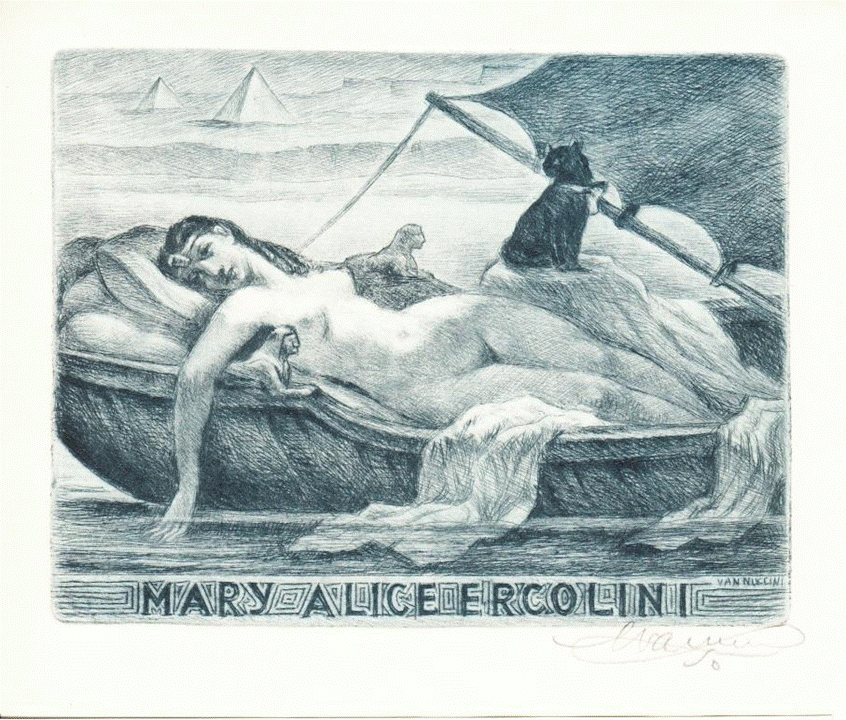
    Vannuccini, Enrico (1900–1990), printed by Bolaffio, Italian Ex Libris centre, Milan, ‘Ex libris for Mary Alice Ercolini’, 1950, copper engraving, signed and dated with pencil in the lower right margin, 14 x 16,5 cm.

    It is Sail in Amsterdam, from last Wednesday the IJ is loaded with boats, tall and small. Every night there is an impressive fire work show.

    CotW Sail fire works

    Back to the boats. Of course there is an pharaonic answer. Here I chose the form of an ex-libris etching, the signature medium of the Italian artist Enrico Vannuccini. This one he made for Mary Alice Ercolini, herself also an artist that made ex librisses.

    The connotation with her Royal Cleopatra is obvious, the protecting uraeus on het forehead and cork screw curls as could be found on Roman scupltures of Isis. Although she lazely lays in her bark in an Orientalist way, the Egptian connotation is obvious by the two pyramids in the back ground. Her gawn slipped downwards, in a fashion that again relates to the nineteenth century. Her arm lazily hangs in the water, over a sphinx support that is paralleled by the second one on the other side of the ship. The feline character is confirmed by the black cat.

  • Catch of the Week 24: Adieu summer holiday!

    CotW Adieu souvenir

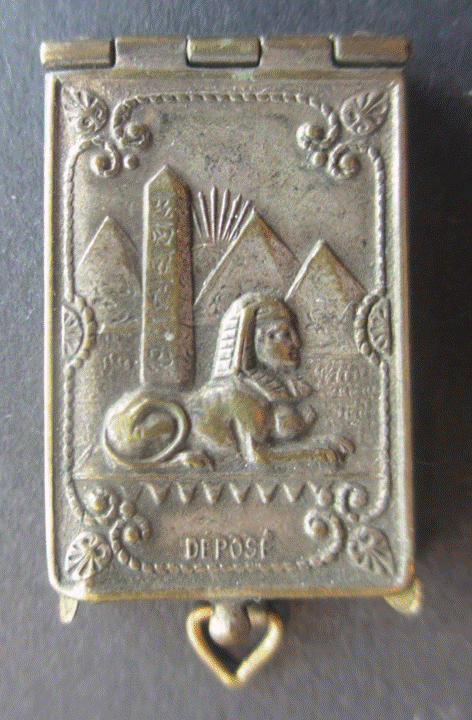
    French, pendentif with sphinx and crescent moon with star, brass and glass, 3,6 x 1,7 x 0,4 cm.

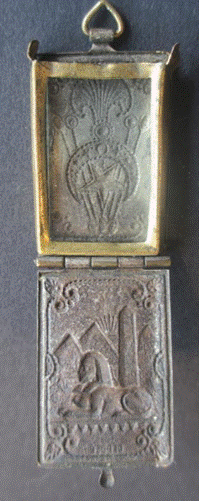
    Schools are starting again, holiday is over! Pictures of our experiences were apped, shared on facebook. But also in the pre-digital era memories of the journey were wished to keep. Here is a very fine example of a piece of jewelry that showed on one side the sphinx backed up (not after reality) by an obelisk, described with pseudo-hieroglyphs, on the third plane three pyramids and a rising sun. It is actually a small box that can be opened and which contains a glass plate.

    CotW Adieu souvenir interior

    I recently saw another example on ebay that made the function of a souvenir box clear: originally there were two pieces of glass, where in between a leporello of souvenirpictures were held.

    Click here to see the original photo’s inside the souvenir box