Category: Uncategorized

  • Catch of the Week 23: Fornasetti

    CotW Fornasetti

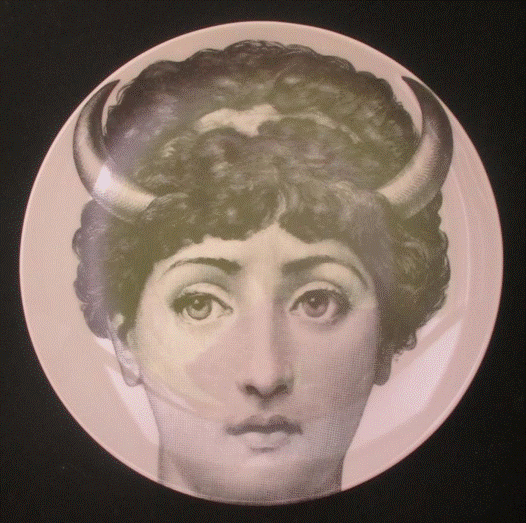
    Fornasetti,Piero (1913-1988), ‘With horns’, no 263 in the series ‘Tema e Variazioni’, porcelain, d. 26 cm.

    This plate is made by Piero Fornasetti with the iconic female face he used in over 500 variations. It depicts the soprano Lina Cavalieri, a face he found in a 19th-century magazine.
    She wears horns, so who is she. Can she be Io? The unfortunate princess Zeus got a crush on. When his envious spous Hera discovered the love affaire, Zeus turned the princess into a white cow.

    Click here where to find a collection of Fornasetti in Prague

  • Catch of the Week on Tour: Prague

    CotW on tour Praag

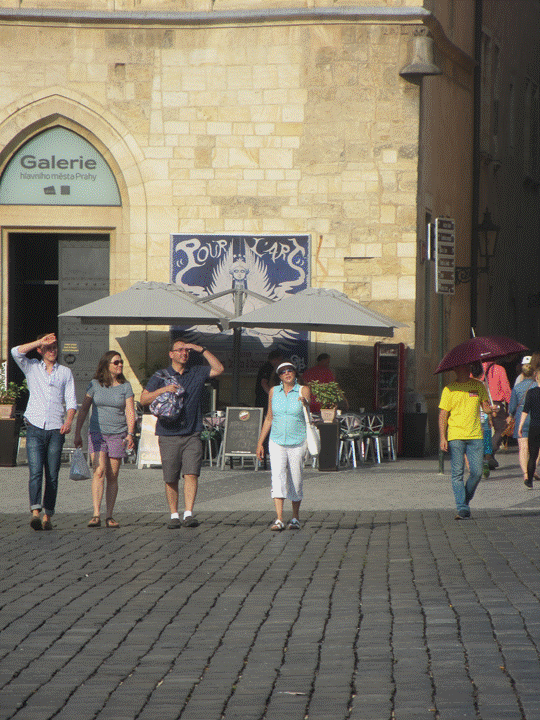
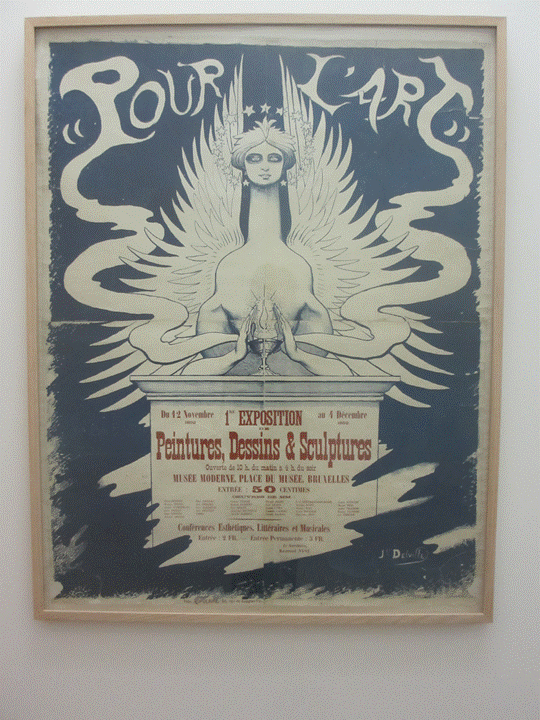
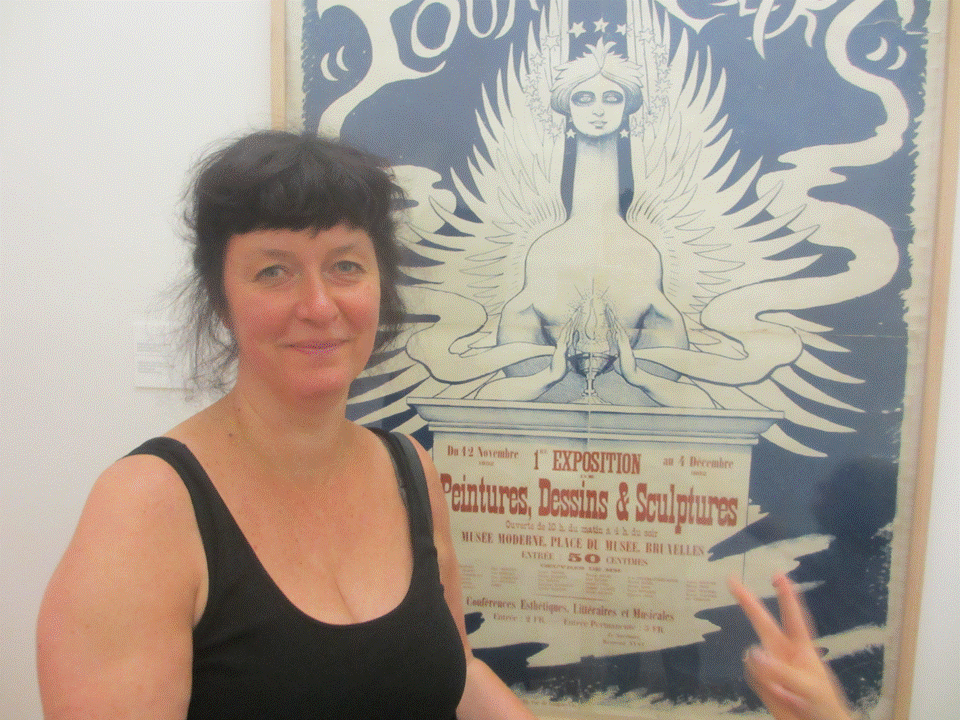
    In Prague I did not meet a sphinx sculpture in the street. But I did notice a huge announcement for the exhibition of the Belgium Symbolist Jean Delville in the City Gallery and recognized the sphinx right away. It actually depicted a poster that Delville made in 1892, to promote the ‘Salon pour l’art’in Brussels. He was co-founder of this new Belgium group that, beside the other avant-garde groups ‘Les XX’ and ‘La Libre Esthétique’ was active in Belgium to introduce new art.* This affiche was of course part of the show.
    CotW on tour Praag affiche

    Delville, Jean, ‘Salon pour l’Art’ 1892, affiche color lithograph, Letterenhuis Antwerp

    The exhibition contained a lot of works from private collections displayed in the beautiful House at the Stone Bell. It had clear themes (starting from Realism) and in each room work from Czech artists is added.

    Click here for the website about the exhibition

    CotW on tour Praag inside


    * Cole, Brendan, ‘Jean Delville and the Belgium Avant-Garde’ in: The Symbolist Movement: Its Origins and Its Consequences. (Cambridge Scholars Publishing) Newcastle upon Tyne 2010, pp.129-146.

  • Catch of the Week on Tour: Weimar 2 HAAB

    CotW on tour Weimar HAAB

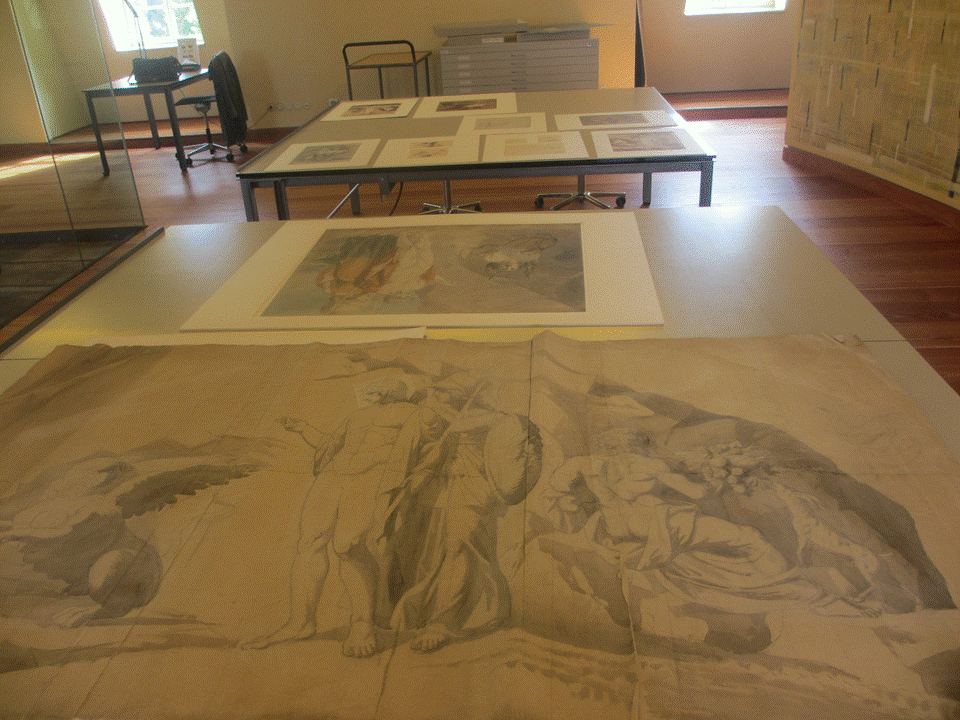
    In the Herzogin Anna Amalia Bibliothek I had the opportunity to see a sketch of Johann Heinrich Meyer (1760-1832): for my research on the sphinx, I found three sketches of Oedipus and the Sphinx he made. But when I arrived, I was not only warmly welcomed, there were 13 sketches available to research, to my surprise!

  • Catch of the Week on Tour: Weimar

    CotW on tour Weimar

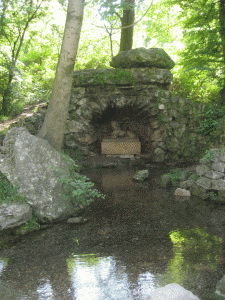
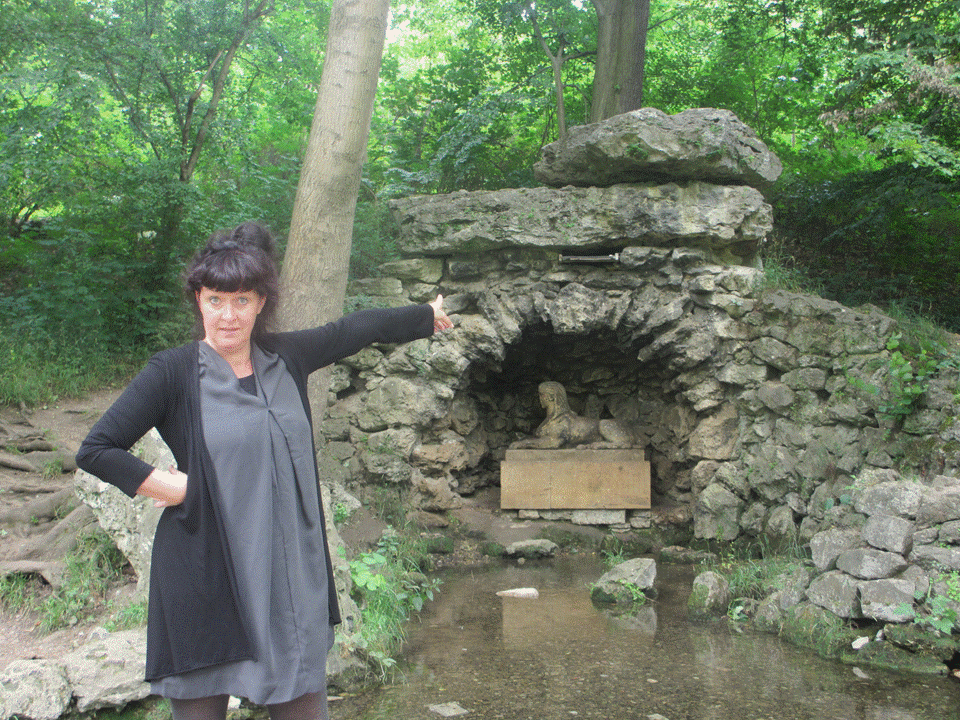
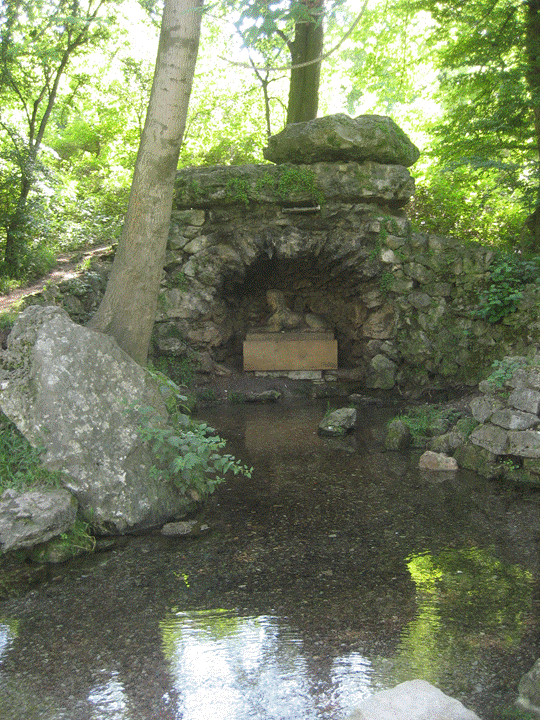
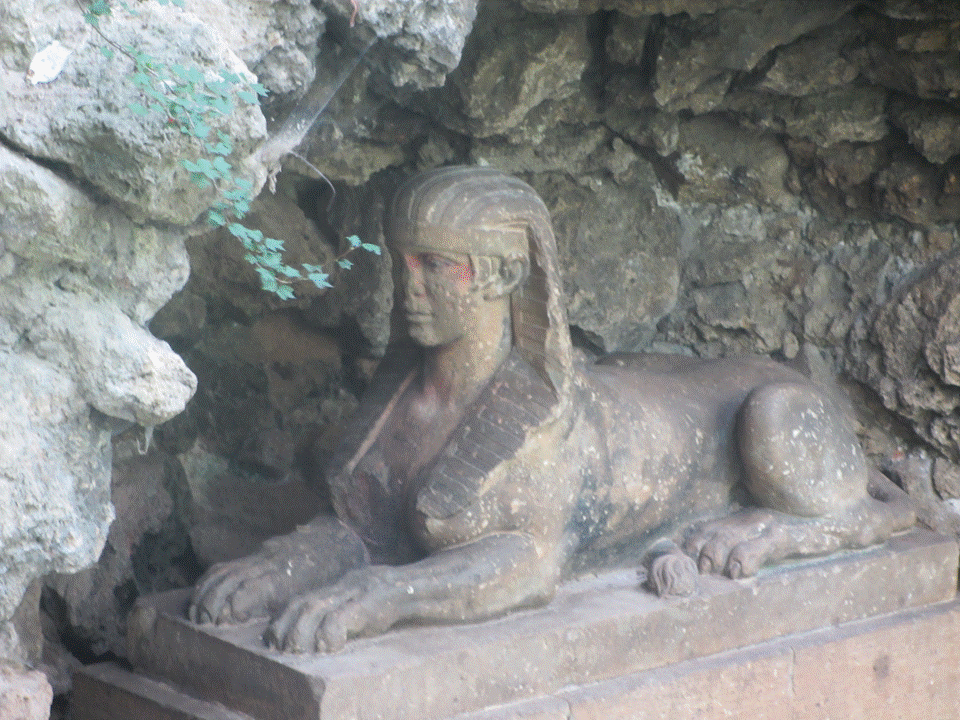
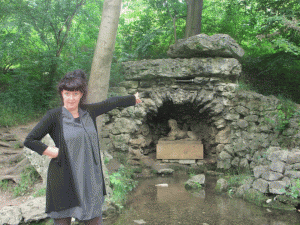
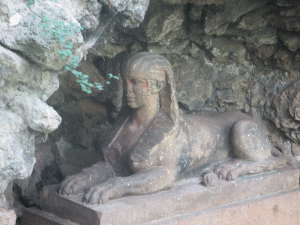
    Klauer, Martin Gottlieb 1(1742-1801)   ‘Sphinxgrotte’ (sphinx cave) 1786, sandstone in travetin cave architecture, Park an der Ilm, Weimar (replica, original in the Roman House)

    foto: Klaas Herman Knol

    A sphinx in a grotto. It is part of the eighteenth-century tradition in Weimar where a park of 48 hectare was realized. In order to give a harmonious experience of nature meeting culture, a snakestone (1787), three columns (1788) and a ‘Roman house’ (1791-98) were realised. It followes the tradition of the ‘jardin pittoresque’, the pittoresque garden, that developed during the second half of the sixteenth century. The meeting with culture on unexpected places according to a well coordinated plan, was full of literary suggestions, often referring to mythology. Meeting the sphinx, would result in a moment of contemplation for the wanderers.

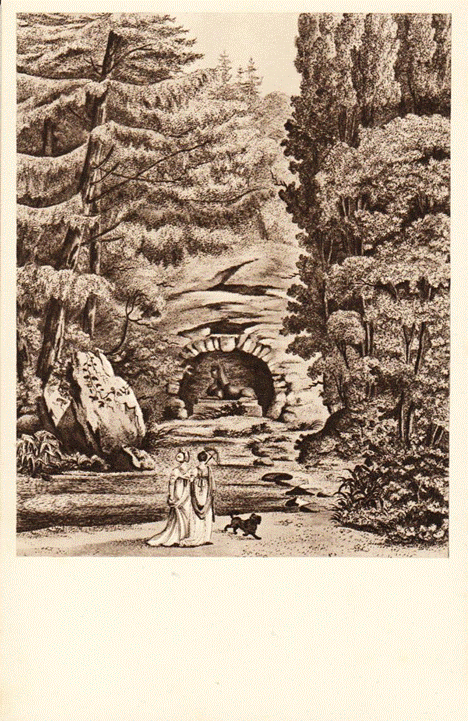
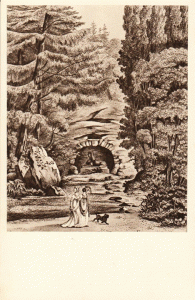
    How it was supposed to work, can be seen in a fine work by Georg Melchior Kraus, a friend of Goethe, where two ladies can be seen on the back, while walking up the sphinx. Thety are dressed in the new fashion of classical white dresses with an elegant high waistline.

    For more Weimar related post cards, click here.

    Kraus, Georg Melchior (1737-1806), ‘Grotte der Sphinx im Park bei Weimar‘, mezzotint Bruckmann
    CotW on tour Weimar Kraus

    CotW on tour Weimar 2
    The sphinx is from the pharaonic prototype, but more relevant is its placement in a cave. It became a bit of a traditions, since in painting Ingres placed his sphinx in a cave and ‘The Great Sphinx’ of the Louvre also houses in a cellar for years.
    CotW on tour Weimar detail

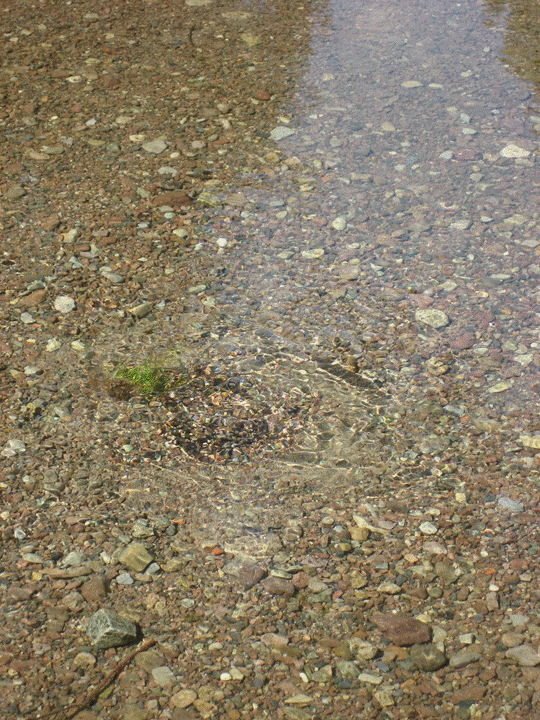
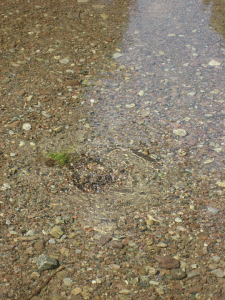
    The sphinx is placed over water, indicating the Leutra-spring, a karst-spring rising from the geological Ilmtal-ditch.* here are three exits of the Leutraspring which in the design of the Ilmpark have been integrated, after a few meters, the springwater flows into the Ilm.
    CotW on tour Weimar spring

    Literature:
    * Taylor, Patrick, The Oxford companion to the garden. Oxford, 2006, p.232

    Müller-Wolff, Susanne, Ein Landschaftsgarten im Ilmtal: die Geschichte des herzoglichen Parks in Weimar. Cologne/Weimar: Böhlau Verlag, 2007, pp.152-53

    Website:
    Click here for the website
  • Catch of the Week 22: Battle of the Pyramids

    CotW Battle of the Pyramids

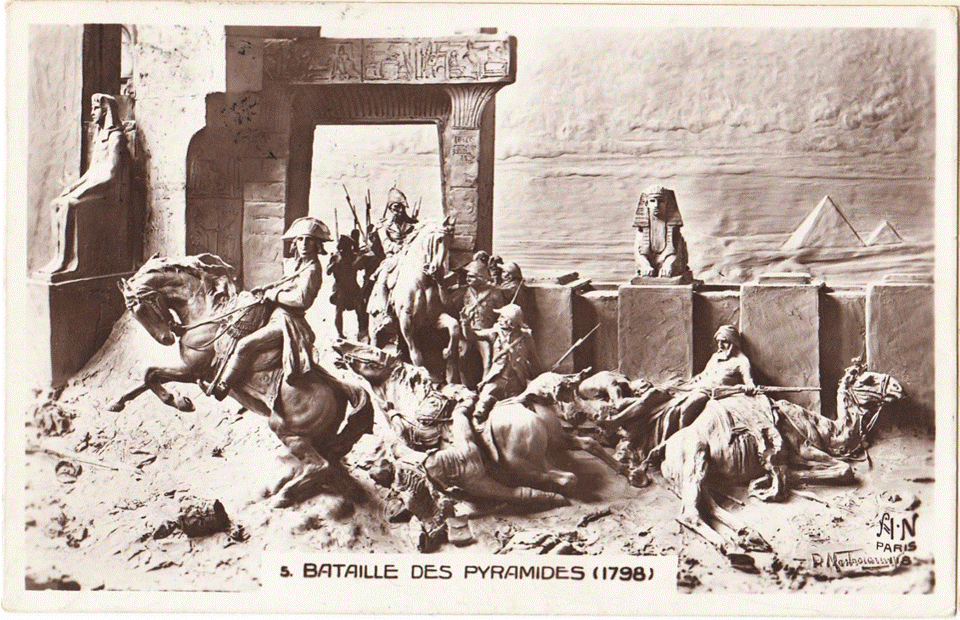
    Mastroianni, Domenico (1876-1962), ‘Bataille des Pyramides’ (Battle of the Pyramids) 1798, postcard after a clay relief

    It is 21 July 1789. After having landed in Egypt, Napoleon Bonaparte headed south with his army.
    During a glooming sunrise, they met the silhouettes of the pyramids. It was nice and beautiful, but less nice was the, by the way indeed beautiful, cavalery of the Mamluks. The Egyptian soil was officially Ottoman since 1517, although the Mamluks were the real rulers during this time. With this army the first serious battle was fought, it was one of the most bloody fights of the eighteenth-century, ‘The Battle of the Pyramids’. The Victory was for the French.
    This remarkable postcard is called a ‘sculptochromie’, ‘photo-sculpture’ or ‘sculptogravure’: Italian artist Domenico Mastroianni . He modelled diverse narratives in clay reliefs, which were photographed and then reproduced as printed postcards to be sold in box sets. After the process, the original was destroyed: now the clay could be re-used for the next tableau. And the next. And the next. And the next….

    Website with information on postcards

  • Catch of the Week 21: Summer parasol / Summer umbrella

    CotW Rohitsi


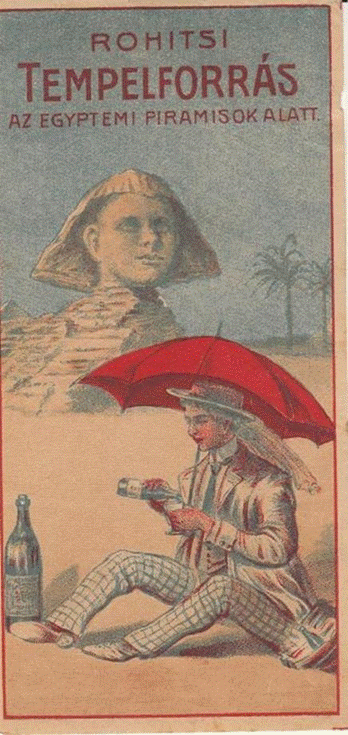
    Hungarian, ‘Rohitsi  Tempelforras’ 1900-1910, chromo litho on card board (advert card) 12,8 x 6,1 cm.

    It is summer. It is holiday. But where this antique tourist setteled under a red parasol, we currently have to hide under an umbrella. Egyptian weather versus Dutch weather. But the drink is equally enjoyed.

    Cheers!

  • Catch of the Week on Tour: Bath

    CotW on tour Bath detail

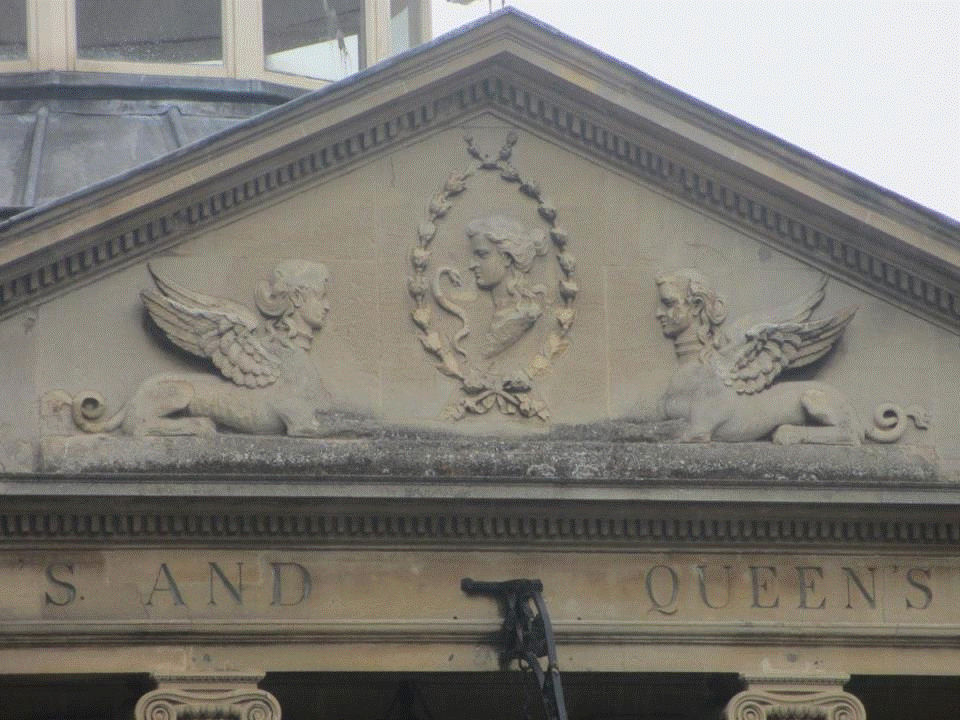
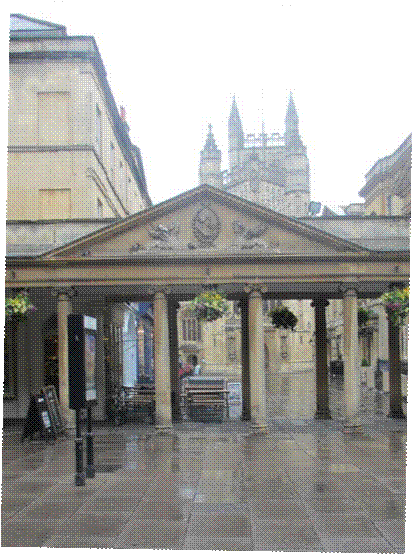
    Above the ‘King’s and Queen’s Bath I found them. A pair of sphinxes in the tympan:  two females lay flat on the belly with upraised wings and a poshly curled tail. These features reveal its 18th century origin (in this case the Georgian era: 1714–1837), in which the mythical creature evoked ancient times, in this case the Roman era.

    In facing each other, they flank a medallion of a female bust that can be identified as Hygieia due to the cup and the snake in front of her. As the daughter of Asklepios, god of medicine, and Epione, goddess of health, she was goddess of good health, recognizable in her feeding the snake (aesculap) from a cup

    Her function makes sense, since in the Georgian era  the curative effect of hot springs were hailed: in addition to bathing in the healing hot springs, many people drank the water.

    Literature:

    http://Hembry Phyllis May, The English Spa, 1560-1815: A Social History. London: Fairleigh Dickinson Univ Press 1990.

    CotW on tour Bath

  • Catch of the Week 20: A la science

    CotW 20 Dux et lux - al la science

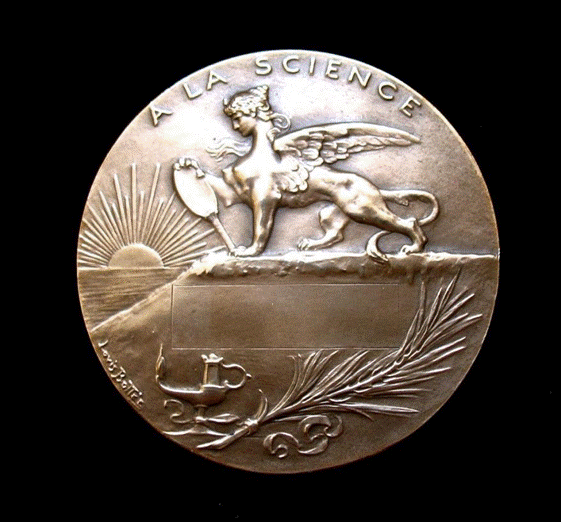
    Bottee, Louis Alexandre (1852-1941), ‘Dux et lux’ verso ‘A la science’ ca. 1900, bronze medal, d. 5 cm.

    http://www.britishmuseum.org/research/collection_online/collection_object_details.aspx?objectId=950062&partId=1

  • Catch of the Week 18: Sophia Loren between protecting sphinx paws

    CotW 18 Loren between Sphinx paws

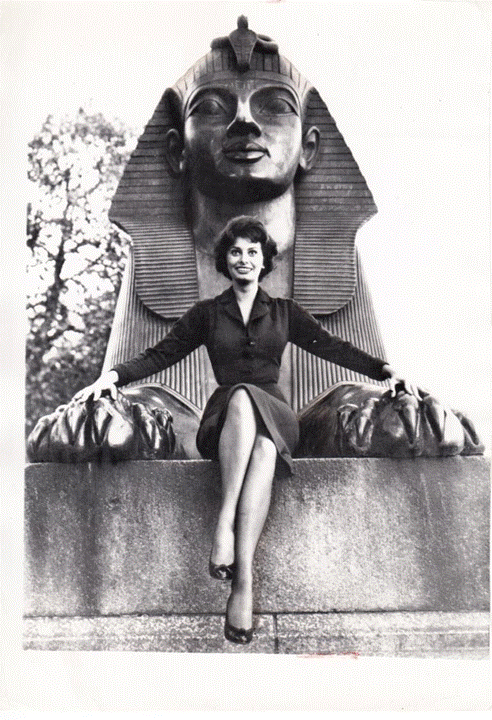
    UP, ‘Wow! Said the sphinx’ 23 oktober 1957

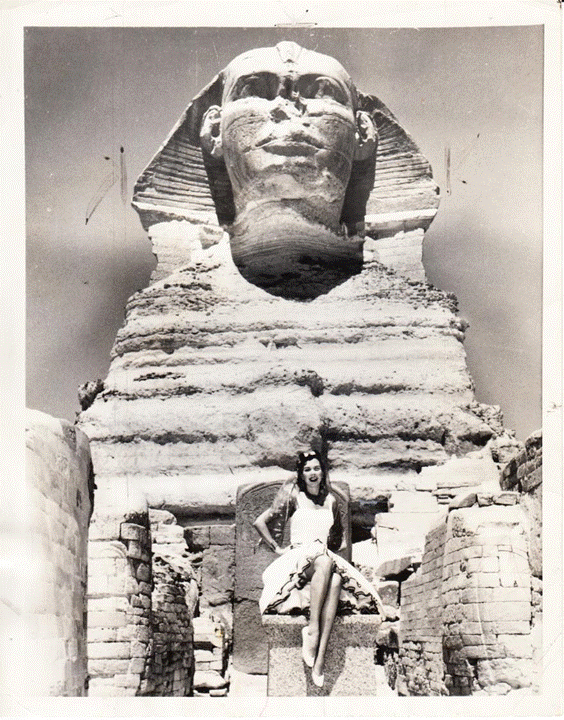
    In 1953 (published in 1957), Sophia Loren is seated between two sphinx claws, the year she plays the starring role in ‘Two Nights with Cleopatra’, and after her breakthrough as the pharaonic Aïda. The sphinx as a throne is closely related to other feline-themed thrones, the earliest of which hails from 6000–5800 BCE: a votive terracotta statue, now in the beautiful Archaeological Museum, Ankara, shows a mother goddess giving birth, seated on a chair with two standing felines as arm rests. As the centuries pass, the panther’s arm rests are interchangeable with the lion and the sphinx.

    But it is the last pharaoh of Egypt in western art who claims the sphinx throne more structurally, like when Cleopatra plays a starring role in Mankiewicz’s epic film Cleopatra (1963). When Liz Taylor enters Rome, the throne she rides in upon is a massively oversized sphinx. Not an Egyptian sphinx served as the prototype, however, but the sphinx that , possibly due to its undamaged features and popularity.

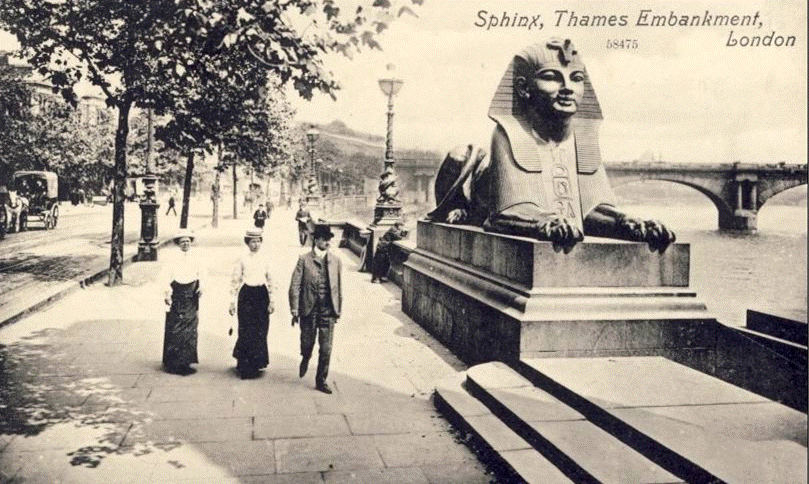
    CotW 18 London Sphinx

    An intriguing press photo reveals a different angle. In 1955, the tap dancer and actress Ann Miller posed before the sphinx of Giza to promote the film ‘Hit the Deck in Cairo’: the well known, iconic Giza sphinx offers a clearly less dimensionally stable back-drop and, without a base, does not translate logically into a moveable throne.

    The constellation “Cleopatra on the Sphinx” was so successful it was embraced by the world of advertising. An advertisement for Bols (Catch of the Week 7) reveals how, from 1930, serious American adverts directed at rational human beings attempted to elicit an emotional response.

    United Press Associations, Wonder what the sphinx thinks?, New York 1955 Sun Times (1961)

    CotW 18 Miller between Sphinx paws

  • Catch of the Week 17: Male desert

    CotW 17 Male desert Camel ad

    ‘Discover Camel Lights satisfaction’ voor Camel Cigarettes november 1979 magazine print ad, 27,5 x 20,5 cm. Field & Stream magazine.p.115.

    Opposing the female ‘desert dry’, the male can also be related to the desert. Smoking. It is after all a camel- low tar- the animal can be seen outlined against the flaming sky on the left. In the Sphinx an eternal companion is found.