Category: Uncategorized

  • Catch of the Week On Tour: exhibition palais de Compiegne

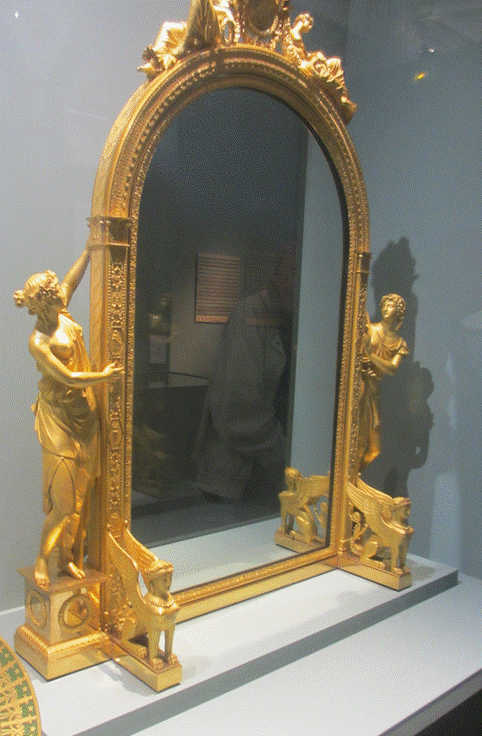
    CotW on tour Palais Compiegne detail

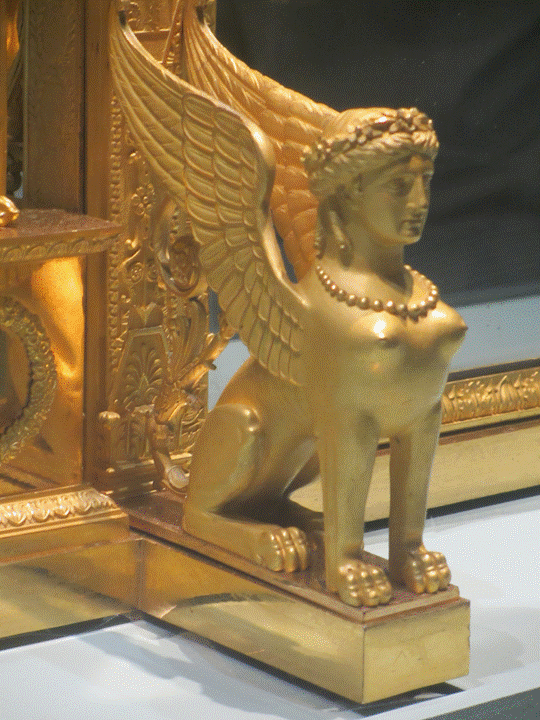
    Biennais, Martin-Guillaume (1764-1843), ‘Mirroir a double face’ gilded bronze, Musée National du Palais, Compiegne

    Detail from a mirror in the exhibition:  ‘Napoléon Ier ou la légende des Arts, 1800 – 1815’.

    CotW on tour Palais Compiegne


    Link:

    http://palaisdecompiegne.fr/expositions-et-evenements/expositions/exposition-en-cours

  • Catch of the Week on Tour: Compiegne

    CotW on tour Compiegne

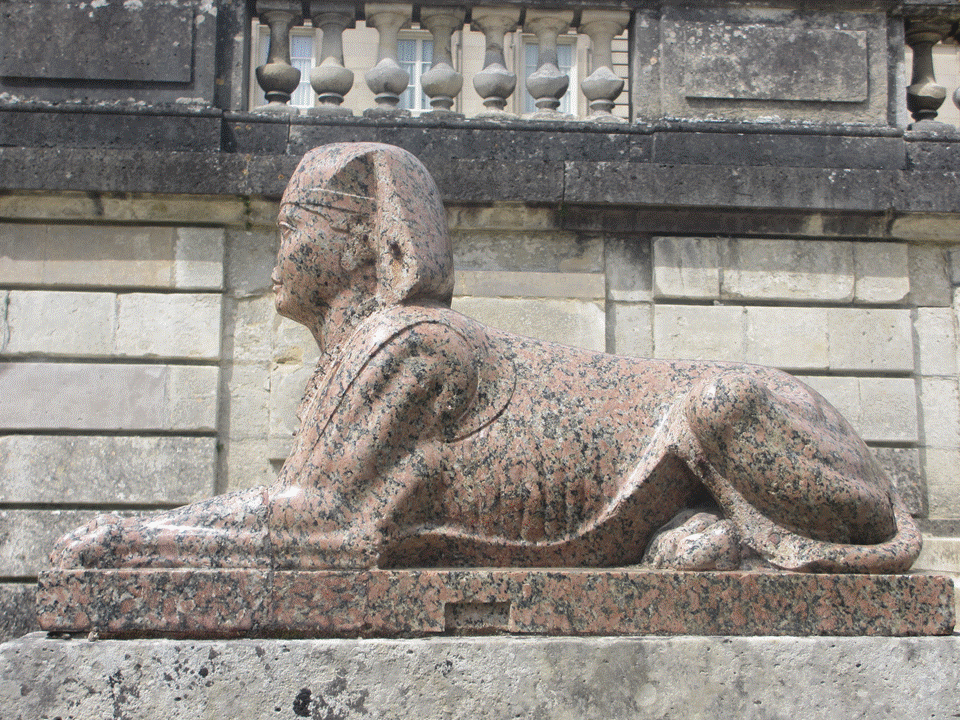
    ‘Sphinx’, 18th century copy after the antique prototype in the Vatican, pink granite, placed in Compiegne in 1845

    Four sphinxes guard the garden site of the palace in Compiegne, made after the pharaonic prototype (lying flat on the belly, male waering the Royal headdress or the nemes. Also the material, pink granite, is a traditional Egyptian stone.

  • Catch of the Week On Tour: Paris

    CotW on tour Paris

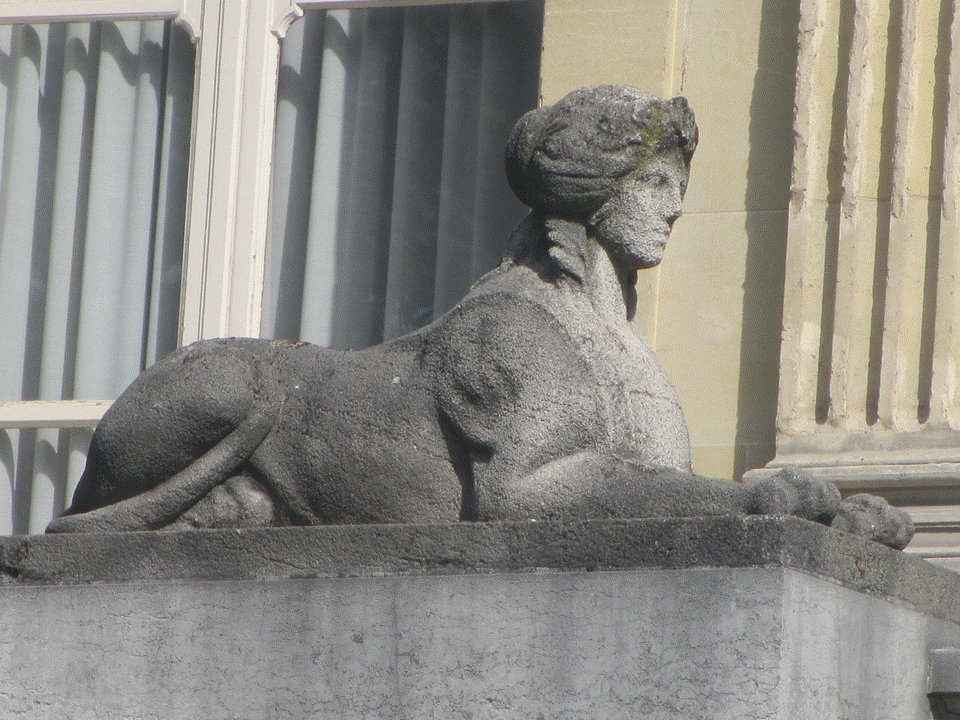
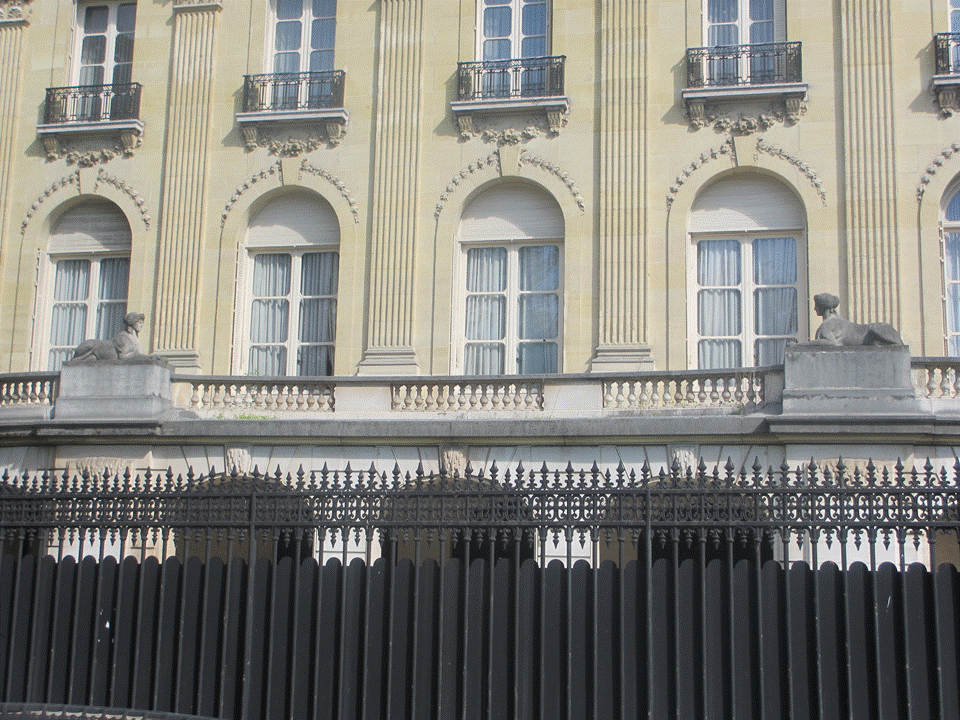
    One of the sphinxes guarding the house at the Rue Le Sueur (16 arr.) in Paris, modelled after the Baroque prototype: lying flat on the belly with a female face.

    CotW on tour Paris overview

  • Catch of the Week 16: Dry like an Egyptian

    CotW 16 Dry like an Egyptian

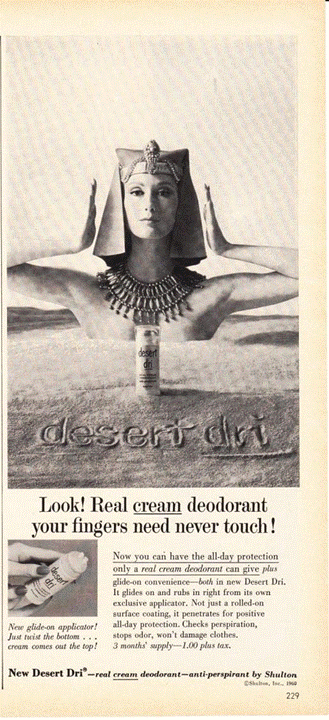
    ‘Desert dri’ for Shulton, 1960, 2/3 page ad with black and white photo, 13 x 29 cm

    This 1960 advert by Shulton, presenting the Desert Dri Roll Anti-perspirant, shows interesting features. Main target is to keep the arm pits dry, pesonified by the desert sand from which the model seems to emerge.

    (more…)

  • Catch of the Week 15: River Nile

    CotW 15 The Nile

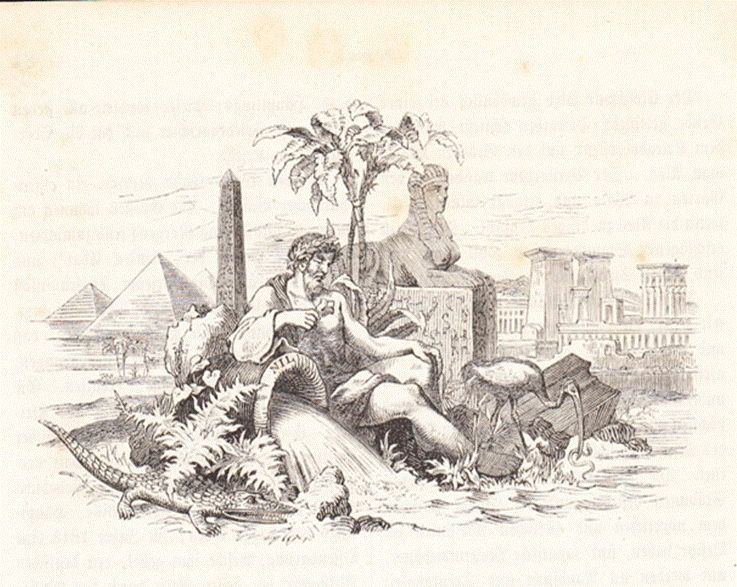
    When visiting the exhibition ‘The Classical Ideal’ in the Teylers Museum in Haarlem, it became obvious a spcific set of sculpture formed the canon of antiquity: Apollo Belvedere, Laocoon and the Farnese Hercules were most popular. But the river gods were present as well. Fauna identified which water was meant: the she wolf suckeling the twins Romulus and Remus represented the river Tiber. The popular Nile was recognizable by the crocodile while resting on a pharaonic sphinx (the male composite creature lying flat on its belly with the royal head dress, the nemes).

    The old bearded man personifying a river with its specifying attributes, transformed to individual creatures. Like the opening illustration of an article by Samuel W. Baker (1821-93) on the search of the source the Nile springs from. Here we see the Nile, resting on the water sprouting urn flanked by the crocodile. Behind an ibis, a sphinx lies high on a plinth, the palmtree serves as a parasol.

  • Catch of the Week 14: Sphinx Support

    CotW 14 Supporting Sphinxes

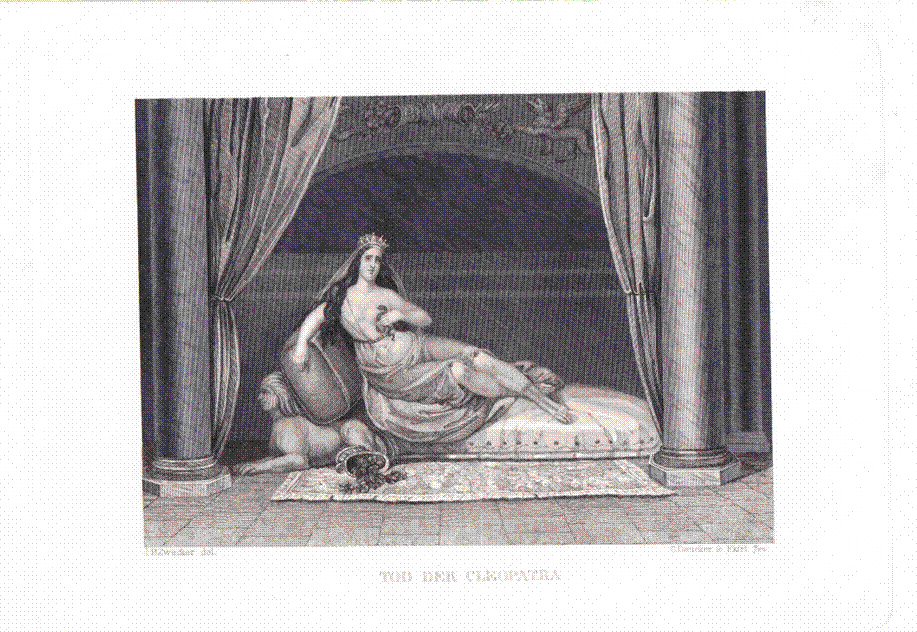
    Zwecker, Johann Baptist (1814–1876), ‘Tod der Cleopatra’ ca. 1840, copper engraving, 14 x 21,8 cm. (page, image: 10 x 13,9 cm.) engraved by Georg Friedrich Karl Deucker (1801-1863) Frankfurt from: Strahlheim, C., ‘Das Welttheater, oder die allgemeine Weltgeschichte von der Schöpfung bis zum Jahr 1840, Frankfurt am Main 1834, vol.3, p. 527 (496)

    Sphinxes serve well as support. This quality developed from prehistoric times when neolithic goddess were seated on feline thrones. The feature passed on to various bronze age goddesses we know by name: Innanna-Ishtar, Isis, Sachmet and the Minoan godess who developed to Cybele in the iron age.1 It was succesfull: Lana del Rey paraphrases the phenomenen when being flanked by two living tigers in her videoclip ‘Born to die’ from 2011-12, here is a link: https://www.youtube.com/watch?v=ihu6Y8uVfTo

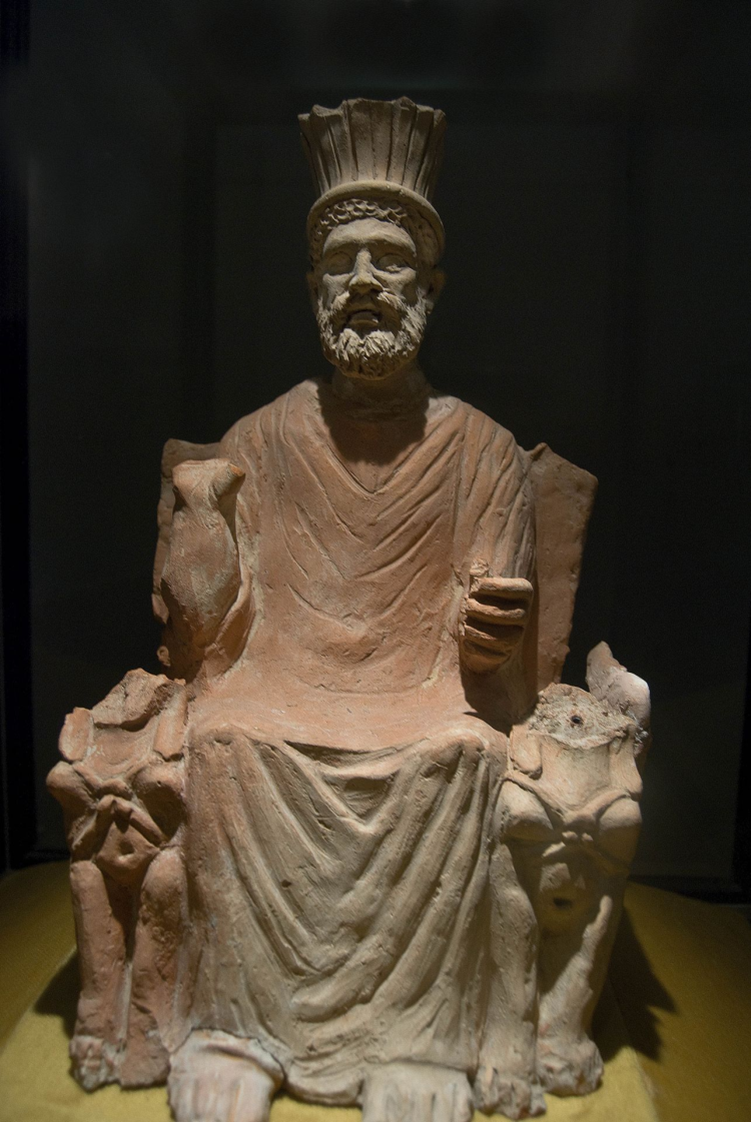
    The function is interpreted as the protection the fierce animals gave to the deities, but the seat also implied a devine control over the earth’s most wild predators. Over the years, the lion’s manes were associated with the sun, the sun god and the male:2 in the exhibition ‘Carthago’ in the Museum of Antiquities in Leiden a terra cotta statue shows the Punic deity Baal Hammon, chief deity of air and war, enthroning between two sphinxes.
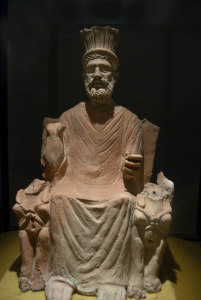
    CotW 14 supporting sphinxes Punic Baal Hammon

    Punish Carthage, ‘Baal Hammon’, 1C AD, terracotta statuette, original finding place: Thinnisch sanctuary, inv.nr. B19, Musee Internationale Bardo, Tunis

    In Western art, the sphinx throne was used as an indicator for pagan rulers like Solomon, but especially the last queen of Egypt could claim this specific furniture decoration: the sphinx had a pharaonic origin. Like Zwecker depicted Cleopatra in 1834, showing her reclining on her death bed while holding the lethal snake to her breast. A big pillow leans against the protector.

    Notes:
    1. Baring, Anne en Jules Crashford, The Myth of the Goddess. London 1991
    Johnson, Buffie, Lady of the beasts: ancient images of the goddess and her sacred animals. San Francisco, 1988
    2. Kemp, Martin, The human animal in western art and science. Chicago/London 2007, p.39.

    More information on the book:
    http://explore.bl.uk/primo_library/libweb/action/search.do?dscnt=1&scp.scps=scope%3A%28BLCONTENT%29&frbg=&tab=local_tab&dstmp=1428333505969&srt=rank&ct=search&mode=Basic&cs=frb&dum=true&tb=t&indx=1&doc=BLL01003520629&vl(freeText0)=003520629&fn=search&vid=BLVU1&fromLogin=true

    All images in the book:
    http://flickrhivemind.net/flickr_hvmnd.cgi?method=GET&page=6&photo_number=50&tag_mode=all&originput=pubplacefrankfurtammain&search_type=Tags&sorting=Interestingness&photo_type=250&noform=t&search_domain=Tags&sort=Interestingness&textinput=pubplacefrankfurtammain
  • Catch of the Week 13: Bon Souvenir d’Egypte

    CotW13 Souvenr d'Egypte

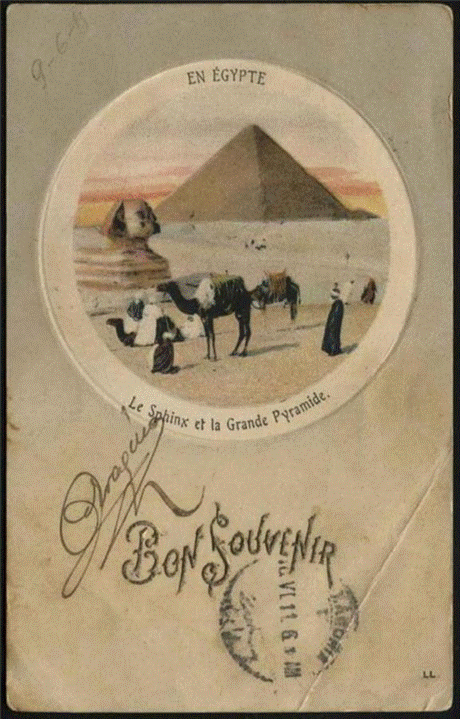
    Postcard ‘En Égypte: Le Sphinx et la grande pyramide’ before 1911 (stamped 9-6-11), tondo: coloured lithograph, text ‘Bon Souvenir’ in relief and gilded letters on double paper, Lehnert and Landrock, Cairo.

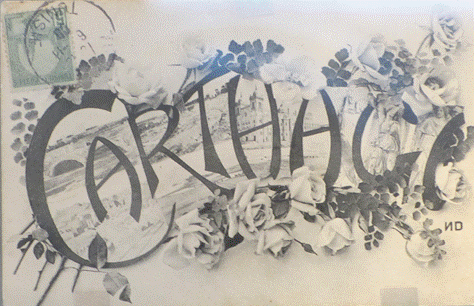
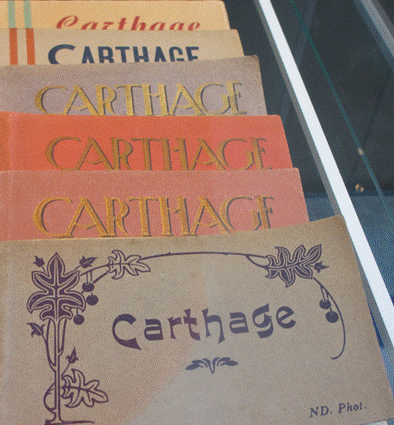
    This weekend I visited the exhibition ‘Carthago’ in the National Museum of Antiquities in Leiden. The artefacts were impressive and beautifully displayed. But not just original pieces were on show: the outer walls told how Carthago was received by western explorers, travellers and tourists. Impressed as they were, they longed to share their experience: post cards were designed and sent with a short wish. The popularity increased, so special series were designed, including posh albums to collect these exotic greetings, by land or place. For Egypt one of the most appealing faces was the sphinx, here as a tondo added. The cards were stamped on the front.

    CotW 13 Carthage post card RMO

    CotW 13 Carthage post card booklet

    http://www.rmo.nl/english

  • Catch of the Week 12: To Arms!

    CotW12 To Arms chimera

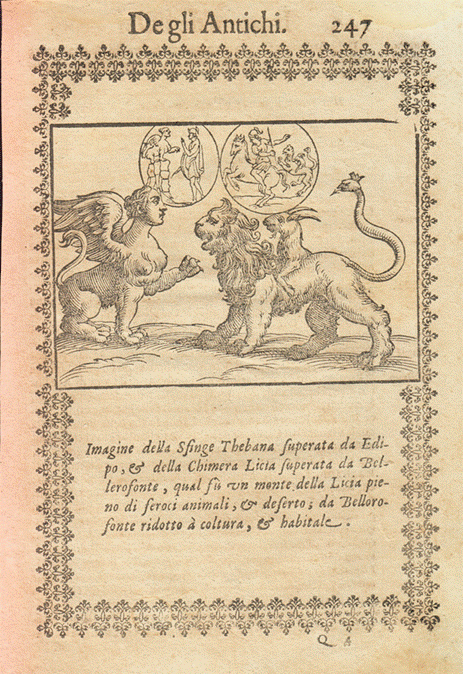
    In the Dutch ‘Week of the Classics’ with this year’s theme ‘To Arms’, here two classical composite creatures explaining their adventures to each other. Expressed in a thought-balloon avant-la-lettre.
    The Chimera, the lion with the goat’s head and the snake tail, discusses his confrontation with the hero Bellerophon. The Theban sphinx, the winged lion with human head, presents the moment Oedipus enters the rocks while explaining the answer on the riddle.

    http://www.weekvandeklassieken.nl/

    Collections:
    Arretinum Museum, Pisa: here the woodcut is turned 90 degrees to the left:
    http://mora.sns.it/_portale/scheda_fonte.asp?Lang=ITA&GroupId=13&id_txt=11946

  • Catch of the Week 11: Wonderous World

    CotW11 Wonder World

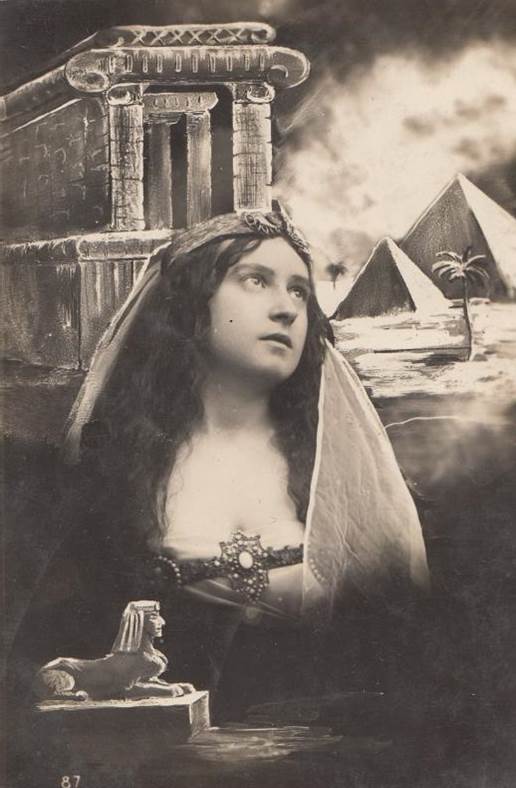
    French, before 1910, silver bromide photo postcard, no. 87 from a series.

    Yesterday, March 14, the exhibition ‘Wondere Wereld’ (‘Wonderous World) started in the Kunsthal in Rotterdam, dedicated to early post cards. The experiment with the available techniques in photography, lead to hilarious worlds: there were a lot of smiling visitors.
    An example is this phantasy I discussed during the opening with the Finnish art historian Harri Kalha who researched the photograped post card: a voluptuous beauty gazes up in a dreamy, Baroque like manner. She is dressed in draperies and jewelry that evokes both ancient as Oriental Egypt, confirmed by the décor of pyramids and palm trees. A bit a-typical in this context is the prominent architectural structure that looks more Roman. It is hard to tell because of the technique: the photographed lady was probably cut out, placed on photographs of a dramatic sky and the two ancient buildings. These were accentuated by drawings on the original. This collage was photographed again, with the post card as the final result.
    On top, the black foreground was filled with a sphinx: it is drawn, yet hard to see if a photo was used as the base. The form is Baroque, with the egyptianesque lying pose and the headdress as a modern variation (like used in Baroque garden statues) on the royal nemes headdres. The gender also swopped from the male pharao to the female.

    http://www.kunsthal.nl/22-768-Wondere-Wereld.html

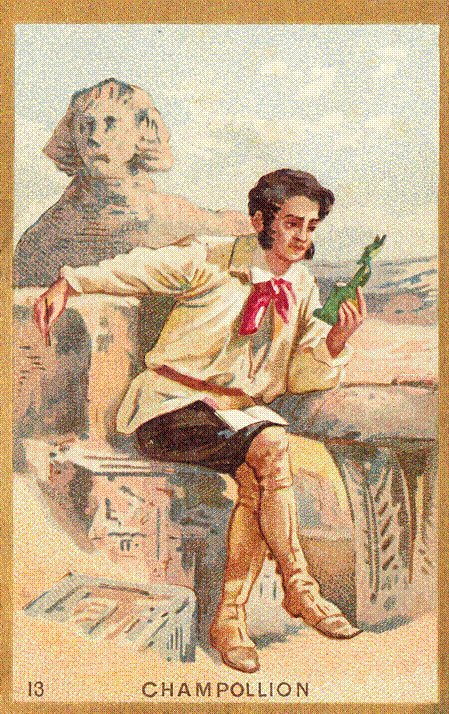
  • Catch of the Week 10: Contemplating Champollion

    CotW 10 Centemplating Champollion

    ‘Champollion’, ca. 1790-1832, no.13 from the series of ‘Les Hommes Celebres’, lithograph, 10,5 x 6,8 cm

    Sitting on a ruinous throne, Jean-Francois Champollion, called le Jeune, contemplates a statuette of a Pharao (wearing the red and white crown) while leaning on a palm column. The French Egyptologist is depicted on the Giza platform, (he actually camped there in October 1828), being backed up by thé face of Egypt, the Sphinx. The architecture is decribed with hieroglyphs, the language he is about to decipher. That was not an easy job: he felt the pressure of time since in Great Brittain Thomas Young started the same quest: the key to the translation, the Rosetta Stone, was in British hands (and now the British Museum) after the defeat of the French in Egypt. Champollion won. Or did he? The process was so tiring he died of a stroke, March 4th 1832.